Renting a car in Malta
Malta is one of the cheapest countries in Europe to rent a car, and one of the least relaxing to drive one. This guide tries to talk you out of it first — then tells you what the headline price is hiding.
Some links below are affiliate links. If you book through one, you pay exactly the same and this site earns a commission. It does not change what gets recommended — the ranking here is the same one I give friends who visit. Full disclosure.
There is a version of this article that opens by telling you a rental car sets you free on a Mediterranean island. That version is written by someone who has never tried to reverse out of a side street in Birkirkara at six in the evening. Malta genuinely is one of the cheapest countries in Europe to rent a car. It is also, per kilometre, one of the most exhausting places to drive one. Both things are true, and which one dominates your holiday depends almost entirely on where you sleep and what you came here to do.
So this guide does the awkward thing first: it tries to talk you out of it. Then, if you still need the car — and plenty of trips genuinely do — it tells you what the headline price is hiding.
1. Do you actually need one?
Malta’s population is concentrated in a dense conurbation along the eastern coast, and the bus network was built to serve exactly that. If your week lives inside that strip, a car is a liability you pay to park.
| Your trip | Car? | Why |
|---|---|---|
| Base in Sliema, Gżira, St Julian’s or Valletta; sightseeing and beaches by bus and ferry | No | You are on the bus spine and the Valletta ferry. Parking here is the single most annoying thing about owning a car in Malta, and you would be renting one to inherit that problem. |
| Two or three days of it, in the middle of a longer stay | Maybe | Renting for 48 hours to do the west coast, Dingli, Mdina and the north is often the sweet spot. Short rentals are cheap here. |
| Travelling with small children, a lot of gear, or limited mobility | Yes | Buses fill up and pass by. Doing that with a pushchair in August is not a holiday. |
| Staying in Gozo, Mellieħa, Marsaskala or anywhere rural | Yes | Service thins out fast once you leave the centre, and evening buses can be an hour apart. |
| Visiting between November and March | Yes, and it is cheap | Off-season rates collapse, the roads empty out, and you can park almost anywhere. Winter is the best time to drive in Malta by a wide margin. |
| Here for sunrise at Dingli, dusk at Għajn Tuffieħa, or diving sites | Yes | The good light is at the hours the buses are not running. |
Rent for the two days you need the island, not for the week you need a parking space. The most useful sentence in this guide
2. What the price on the comparison page is not telling you
You will see daily rates that look implausible, especially outside summer. They are usually real. The money is made back in four places, and knowing them in advance is the entire game.
The excess, and the desk conversation about it
The cheap rate almost always comes with a large insurance excess — the amount you are liable for if anything happens — secured by a hold on your credit card. At the desk you will be offered the company’s own super-cover to reduce it to zero, and that add-on frequently costs more per day than the car. Your three options, in ascending order of how much sleep you will get: accept the excess and the card hold; buy third-party excess insurance before you travel, which is dramatically cheaper than the desk price; or take the full coverage offered at the point of booking through the comparison site, which sits somewhere in between. What you should not do is turn up with no plan and decide while a queue forms behind you.
The card, and whose name is on it
Most companies want a credit card in the main driver’s name with enough available balance for the hold. Debit cards are refused more often than people expect, and a refused card at the desk on a Saturday night at Malta International is a genuinely bad start to a trip. Check this before you book, not after.
The fuel policy
Full-to-full is the honest one. If you are offered full-to-empty — you prepay a tank at their price and bring it back dry — you are buying fuel you will not use. Worth knowing separately: many Maltese petrol stations are unattended outside working hours and run on note-feeding machines that can be fussy about worn banknotes, and some close on Sunday afternoons. Do not plan to refuel at the last minute on the way to a Sunday evening flight.
The small print that bites in Malta specifically
- Gozo: most companies allow it, a few do not, and a few charge for the privilege. Ask before you book if Gozo is on your list.
- Valletta: the city centre is under camera-controlled vehicular access. Charges are billed to the registered keeper, which is the rental company, which will then bill you with an administration fee on top. Park outside the gate and walk in — everyone does.
- Additional drivers and young drivers: both are chargeable extras nearly everywhere. Add them at booking, where they are cheaper.
- Automatic transmission: a minority of the fleet and priced accordingly. If you cannot drive a manual, book early — this is the category that sells out.
Compare before you commit to a company
Malta’s rental market is a mix of international names and strong local operators, and the gap between the best and worst price for the same week is routinely large. A comparison site is the fastest way to see the whole market and the full-coverage option side by side, and most rates can still be cancelled free of charge if your plans move.
Compare Malta car rental prices Affiliate link — same price for you, a commission for this site. Read the excess terms on the rate you pick before you book; that is where the real differences live.3. What driving here is actually like
Malta drives on the left, a British inheritance along with the plug sockets and the red post boxes. If you are coming from mainland Europe or the Americas, budget the first hour for feeling stupid at roundabouts. That is normal and it passes.
What does not pass, and what nobody warns you about, is the density. Villages were laid out for carts: streets are one car wide, with parked cars on both sides and a blind bend at the end. Junctions often have no markings and are resolved by eye contact. Lane discipline on the main arteries is best described as advisory, indicators are treated as optional, and someone will overtake you on the inside. None of this is dangerous at the speeds involved — limits are 50 km/h built-up and 80 km/h on open roads, and traffic rarely lets you reach either — but it is relentless, and after ninety minutes of it you will understand why locals describe a twelve-kilometre drive as a whole afternoon.
The practical advice: take the smallest car you can fit in. Every extra centimetre of width is a street you cannot enter. Use a phone mount and let the navigation talk, because you will not have a spare second to look at a screen. And leave far more time than the distance suggests — morning and late-afternoon traffic between the north and the harbour area is genuinely heavy.
4. Parking: the real cost of the car
Parking in Malta is mostly free and almost never available, which is a worse combination than paid and plentiful. In Sliema, Gżira and St Julian’s, circling for twenty minutes is a normal evening. Some residential zones are reserved for residents’ permits, and wardens do issue tickets.
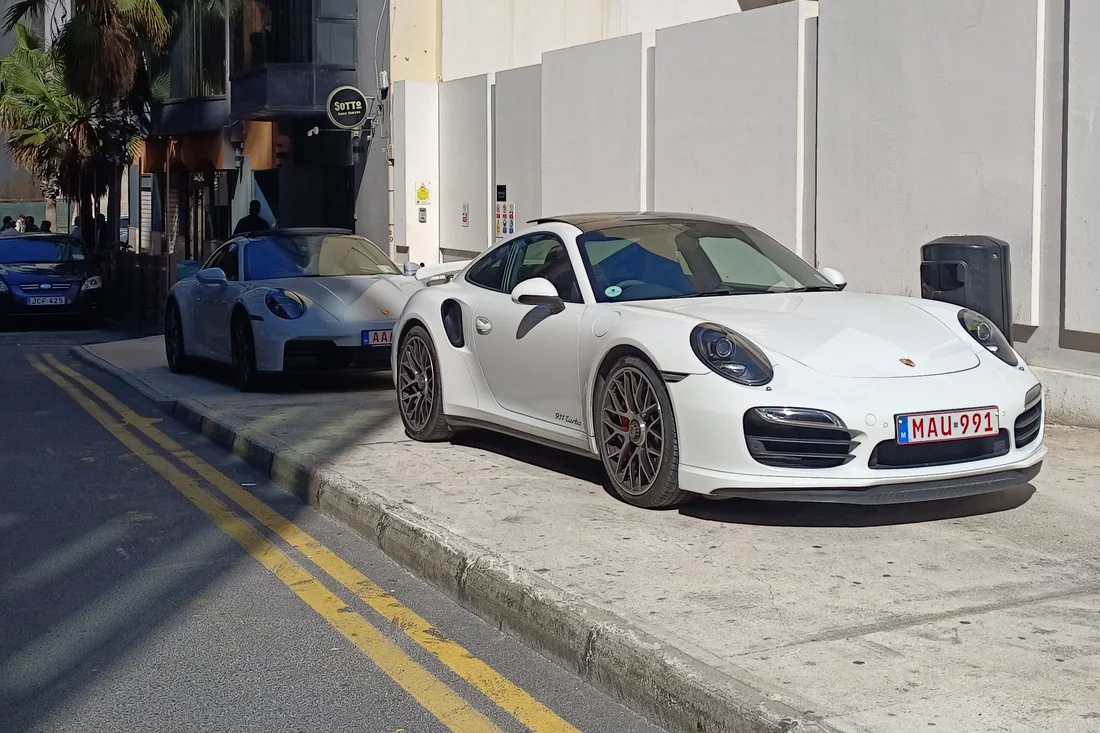
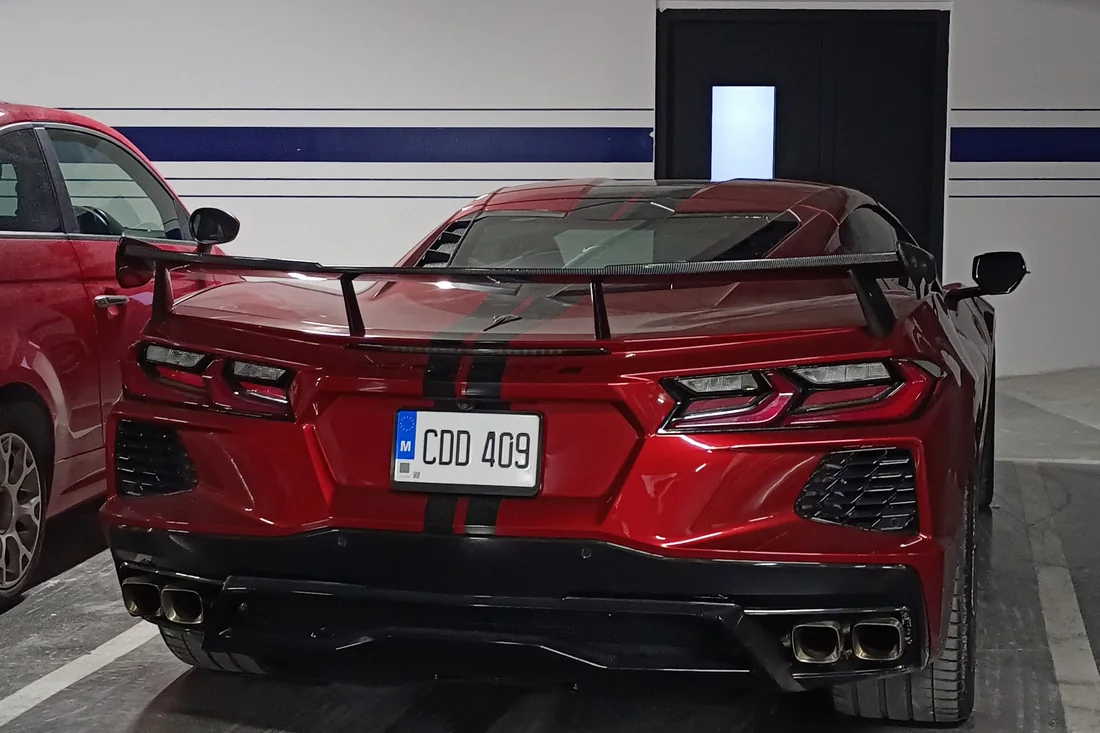
The workaround is the paid underground car parks, which exist in the busiest spots and cost a few euro for a few hours — trivial next to the time they save. Before you book accommodation, search the listing page for the words “parking” and treat “street parking available” as meaning none. A place with its own space is worth paying a premium for if you are renting a car, and our guide to where to stay flags which areas make that realistic.
5. Taking the car to Gozo
The Gozo Channel ferry runs between Ċirkewwa at Malta’s northern tip and Mġarr on Gozo, and the crossing itself is about twenty-five minutes. The pleasant quirk is that you pay on the way back: you buy your ticket when leaving Gozo, so the outbound leg feels free. In peak summer the queue at Ċirkewwa can swallow a sailing or two, so arrive with slack in the plan or travel outside the middle of the day.
The alternative worth considering, especially for a single day trip: leave the car in Malta, walk on as a foot passenger, and rent separately in Gozo or use the local buses. Gozo is small, empty by Maltese standards and a great deal more relaxing to drive — which is exactly why some people rent there and nowhere else.
6. Booking it, in order
- Decide the dates you need it, not the dates you are here. This one decision usually saves more than any discount code.
- Book early if you need an automatic, a child seat or a larger car. These are the scarce categories, particularly June to September.
- Compare, then read the excess and fuel terms of the specific rate, not the company’s general reputation. The same company sells good and bad rates on the same day.
- Sort your excess cover before you fly, whichever route you choose. Deciding at the desk is how the day-rate quietly doubles.
- Photograph the car, all of it, before you leave the bay — including the roof, the alloys and the windscreen. Malta’s streets are narrow and its kerbs are limestone; scuffs are common and disputes about who made them are commoner.
7. The short version
If you are staying on the Sliema–St Julian’s–Valletta corridor in summer for a week, skip the car and read the guide to buses and ferries instead. If you are in the north, in Gozo, travelling with children, or here outside high season, rent one — it will be inexpensive and it will transform the trip. And if you are somewhere in the middle, rent for two days, pick the smallest car on the lot, and give yourself the other five days off from looking for a parking space.