Bus, ferry, taxi or car
You can see most of Malta on a two-euro bus ticket. You can also lose half a day waiting for one in August. Here is what each option is genuinely good at.
Some links below are affiliate links. If you book through one, you pay exactly the same and this site earns a commission. It does not change what gets recommended — the ranking here is the same one I give friends who visit. Full disclosure.
Malta has a bus network that will take you almost anywhere on the island for the price of a coffee, and a ferry that crosses the Grand Harbour in less time than it takes to find your ticket. It also has a rush hour that lasts most of the day and a habit, in August, of driving a full bus past your stop without slowing down. Getting around here is not difficult. It is just rarely as fast as the map suggests.
Here is what each option is genuinely good at, in the order most visitors need them.
1. Getting out of the airport
Malta International is at Luqa, in the middle of the island, twenty to forty minutes from almost anywhere you are likely to sleep. There are four sane ways out.
| Option | Best for | The catch |
|---|---|---|
| Express bus (the X routes) | Solo travellers and couples with light bags. Cheapest by a distance, and the X routes go to the main tourist areas and to the Gozo ferry. | Luggage space is limited and the last departures are earlier than you think. Not fun at 1am with two suitcases. |
| Airport taxi desk | Late arrivals. Fares are set by destination zone and paid at the desk inside, so there is no negotiation and no meter surprise. | Costs several times the bus. Queues after a bank of evening arrivals. |
| Ride-hailing app | Anyone comfortable with an app. Bolt and the local operator eCabs both work in Malta, usually cheaper than the desk. | Pickup points at the airport are signposted and not always where the app first puts you. Surge pricing exists. |
| Pre-booked private transfer | Families, groups, anyone landing after midnight, and first trips. The driver waits for the flight, the price is fixed, the car fits the luggage. | The most expensive per person unless you are three or more — at which point it is often cheaper than two taxis. |
Book the transfer before you fly
A fixed-price transfer booked in advance is the one bit of Malta admin that reliably pays for itself: the driver tracks the flight, waits if you are delayed, and you skip the queue at the taxi desk with tired children. For two adults with hand luggage arriving in daylight, take the bus instead and spend the difference on lunch.
Check transfer prices Affiliate link. Compare against the airport taxi desk fare for your zone — for short hops to Luqa or Birżebbuġa the desk can win.2. The bus: better than its reputation, worse than its map
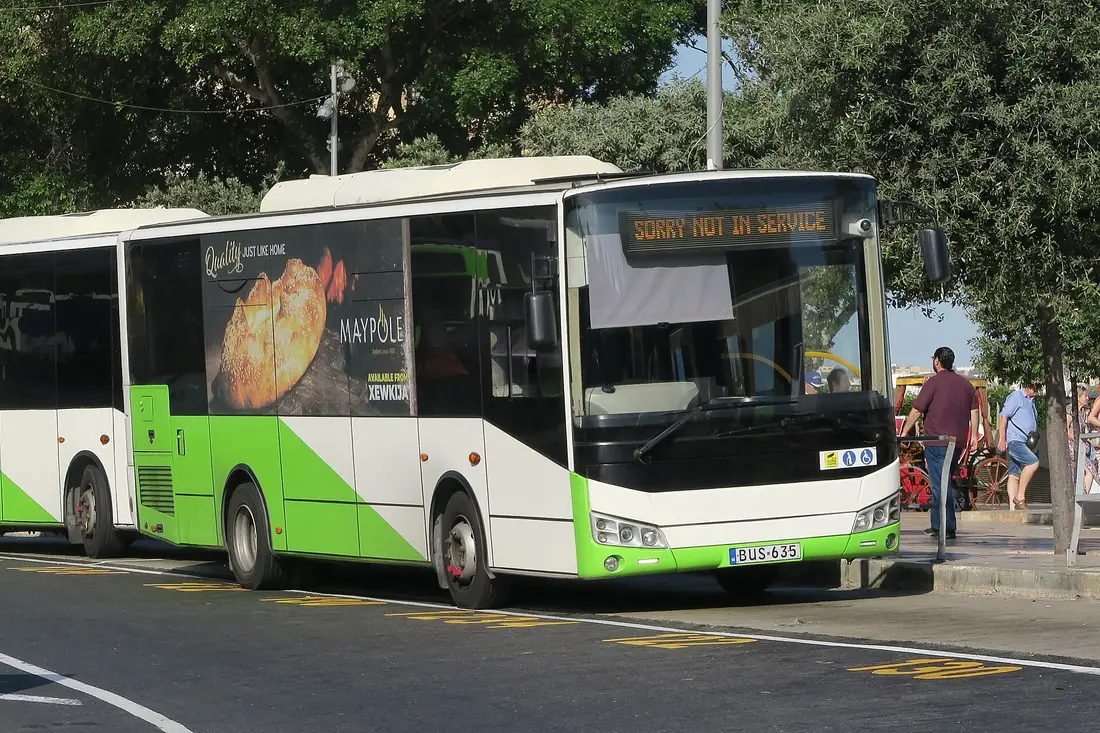
Malta’s public buses are run under the Tallinja brand and cover the island densely. Routes radiate from a few hubs — the Valletta terminus outside City Gate, Sliema Ferries, Buġibba and the airport — and most journeys that are not hub-to-hub involve one change at one of them. The single fare is a flat price regardless of distance, bought from the driver in cash or, more cheaply, loaded onto a Tallinja card. There are also multi-day passes aimed at visitors, which pay for themselves at roughly two or three journeys a day.
Two things are worth knowing before you rely on it:
- Buses fill up and skip stops. In July and August, on the routes to the popular beaches, a full bus will pass you. The fix is to board closer to the start of the route, or to travel before nine or after four.
- The timetable is an aspiration in traffic. Use the operator’s own app for live times rather than the printed board, and add a buffer to anything with a deadline — particularly the run back to the airport.
Fares, passes and live times change; check the operator’s site for the current numbers before you buy a multi-day card.
3. The ferries, which are the best thing about moving around Malta
Three crossings matter, and all three are faster and more pleasant than the equivalent road journey.
- Sliema ↔ Valletta. A few minutes across Marsamxett Harbour, running frequently through the day. If you are staying in Sliema this replaces a bus ride around the creek and gives you the finest arrival view in the country.
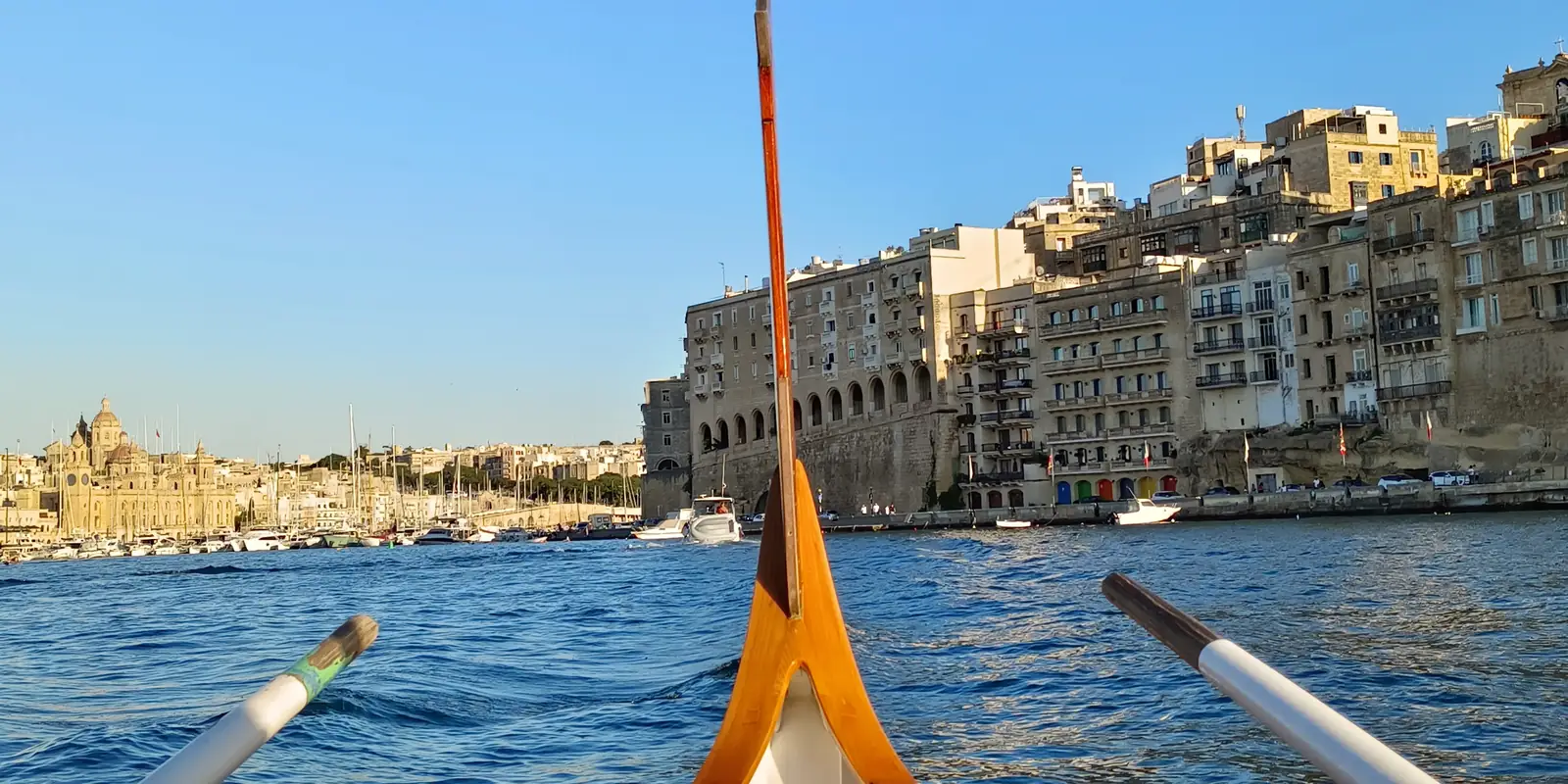
- Valletta ↔ the Three Cities. Across the Grand Harbour to Birgu and Senglea, the quieter and, for my money, more atmospheric half of the harbour.
- Ċirkewwa ↔ Mġarr (Gozo). The car and passenger ferry to Gozo, about twenty-five minutes, with the fare collected when you leave Gozo. There is also a faster passenger-only service between Valletta and Gozo, which is excellent if you are not taking a car.
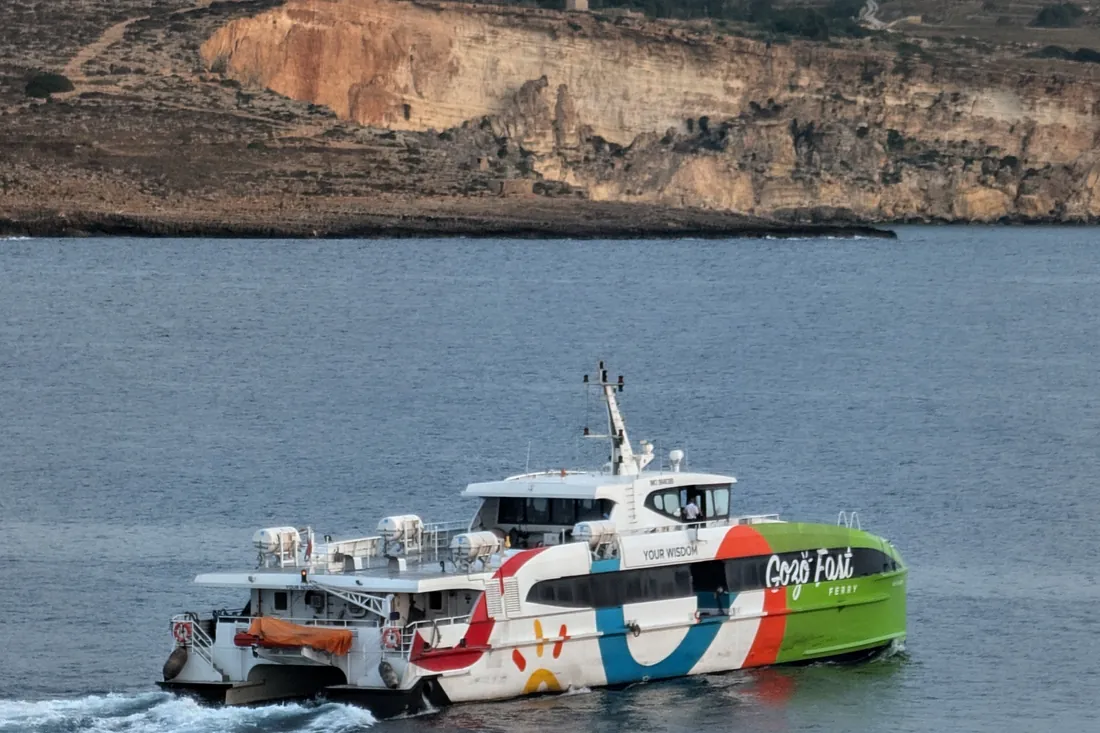
Two of Malta’s three best views cost less than a bus ticket and last four minutes. The harbour ferries
4. Taxis, apps and the white cars
Ride-hailing is well established in Malta and generally the cheapest door-to-door option outside the airport. Street taxis exist but hailing one is not the norm; you book. For a group splitting the fare, a late-evening ride back from a restaurant often costs about what four bus tickets would, and takes a quarter of the time.
5. The car, and the hop-on-hop-off buses
A rental car is covered properly in its own guide, including the part where I try to talk you out of it. The short version: brilliant for the north, Gozo, the west coast and the off-season; a liability if you are based in the harbour towns in summer.
The open-top hop-on-hop-off buses are worth an honest word. They are expensive next to the public bus and they cover ground you can reach for a couple of euro. What you are buying is a fixed route, a seat, commentary and no route-planning — which for a first day, in heat, with limited time, is a defensible purchase. Just do not mistake them for transport; treat them as a sightseeing tour that happens to move.
Guided day trips and island tours
The tours worth paying for in Malta are the ones that solve a transport problem you cannot solve yourself: Gozo in a single day, the Blue Grotto and the south coast, the Comino crossing, or an evening in Mdina without working out the last bus home. Most can be cancelled free up to twenty-four hours ahead, so booking early costs nothing.
Browse Malta day trips Affiliate link — the price is the same as booking direct.6. Walking, and the two-wheeled options
The Sliema–St Julian’s seafront promenade is a genuinely lovely forty-minute walk and the fastest way between the two in evening traffic. Valletta, Mdina and the Three Cities are walking cities, full stop — steep in places, and the limestone gets slippery in rain, but small.
Bicycles and e-scooters are available and I would not recommend either to a visitor. The roads are narrow, the surfaces are uneven and drivers are not expecting you. If you want two wheels, do it on Gozo, where the traffic is a fraction of Malta’s.
7. What I would actually do
- Three or four days, based in Sliema or Valletta: ferry and bus, no car, one guided day trip to Gozo or Comino.
- A week in summer, based anywhere central: bus pass for the week, ferries for the harbour, a two-day car rental in the middle for the west coast and the north.
- A week off-season, or any trip with children: car for the whole stay, and pick accommodation with parking.
- Based in Gozo: car, without hesitation. The bus network there is real but thin.