Where to stay in Malta
The island is small enough that nowhere is far, and dense enough that the wrong base quietly costs you an hour every day. Here is how locals actually divide it up.
Some links below are affiliate links. If you book through one, you pay exactly the same and this site earns a commission. It does not change what gets recommended — the ranking here is the same one I give friends who visit. Full disclosure.
The whole of Malta fits inside a circle you could drive across in forty minutes on an empty road, which is why every guide tells you the base does not matter. It matters enormously. Not because anywhere is far, but because the wrong base puts you on the wrong side of the daily traffic, or in a street that is still loud at three in the morning, or twenty-five minutes from the ferry that would have made your week easy.
Here is the island as locals actually think about it, followed by the areas in the order I would recommend them to a first-time visitor.
1. The mental model: three Maltas
Forget administrative boundaries. For a visitor there are three:
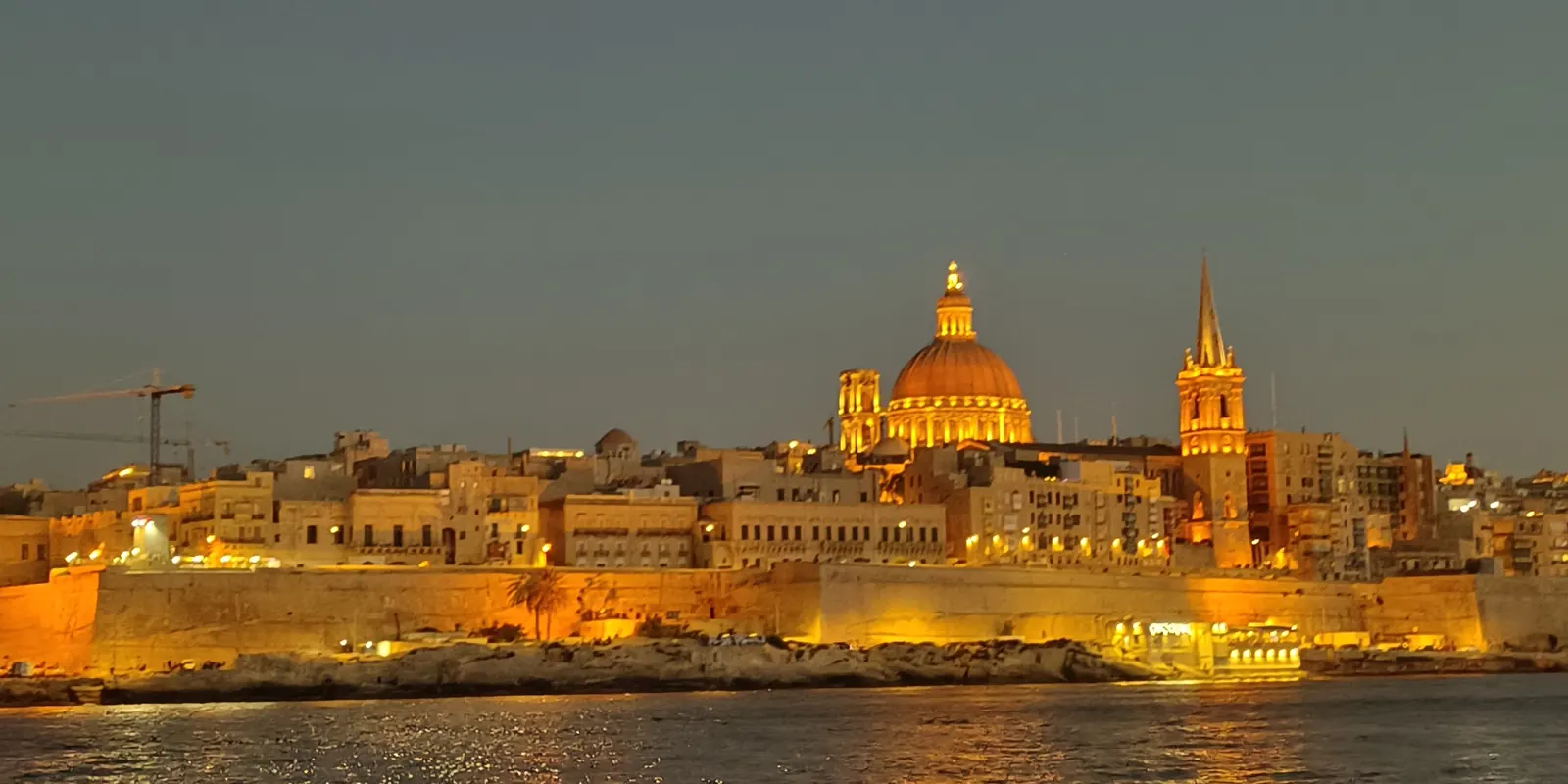
- The harbour corridor — Valletta, Floriana, the Three Cities, Sliema, Gżira, St Julian’s. Dense, walkable, connected by ferries and every bus route, and where the restaurants and the nightlife are. Also where parking goes to die.
- The north — St Paul’s Bay, Buġibba, Qawra, Mellieħa. Cheaper, quieter, closer to the sandy beaches and the Gozo ferry, further from Valletta and thinner on evening transport.
- Gozo — a different pace entirely. Rural, green in spring, empty in winter, and a ferry ride away from everything on the main island.
Pick the corridor for a first trip, the north for a beach week with a car, Gozo when you have already seen Malta once.If you read nothing else
2. The areas, ranked for a first visit
Sliema — the default, and a good one
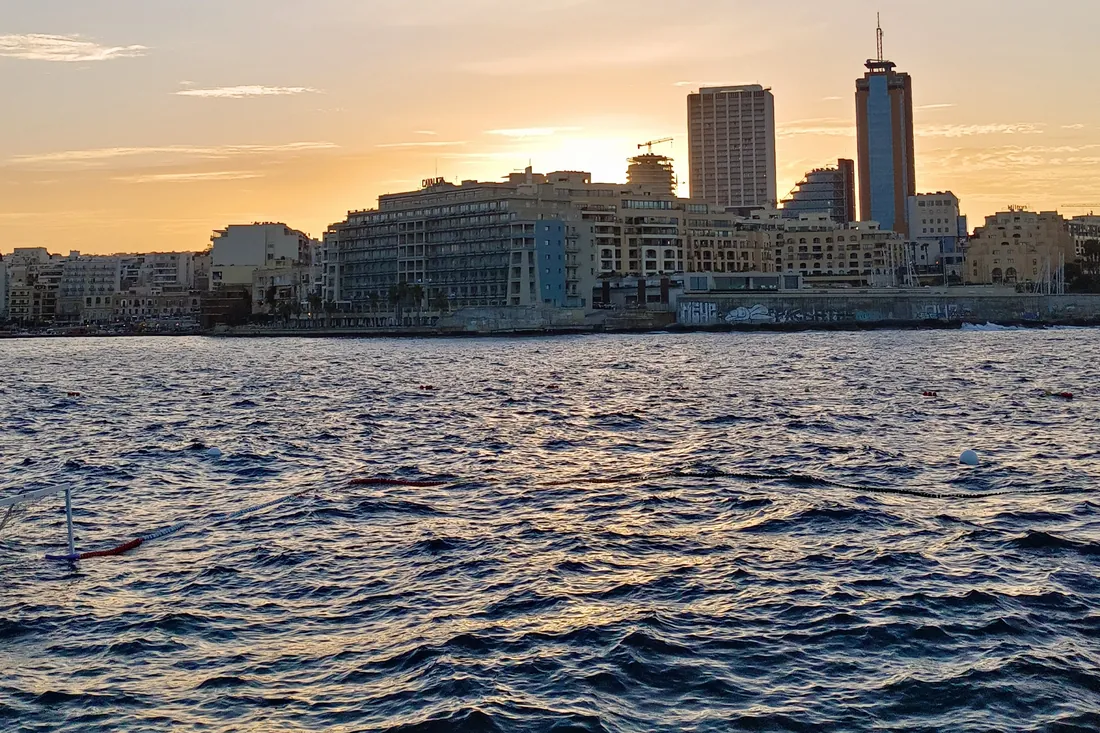
The most practical base on the island. A long seafront promenade, the ferry to Valletta, every bus route you will need, supermarkets, and a wall of apartments with sea views at every price. It is not beautiful in the postcard sense — this is a modern town of tower blocks and construction cranes — and the “beach” is flat rock with ladders into the sea, which is a perfectly normal way to swim in Malta. Choose Sliema if you want everything to be easy.
St Julian’s — the same, plus the nightlife problem
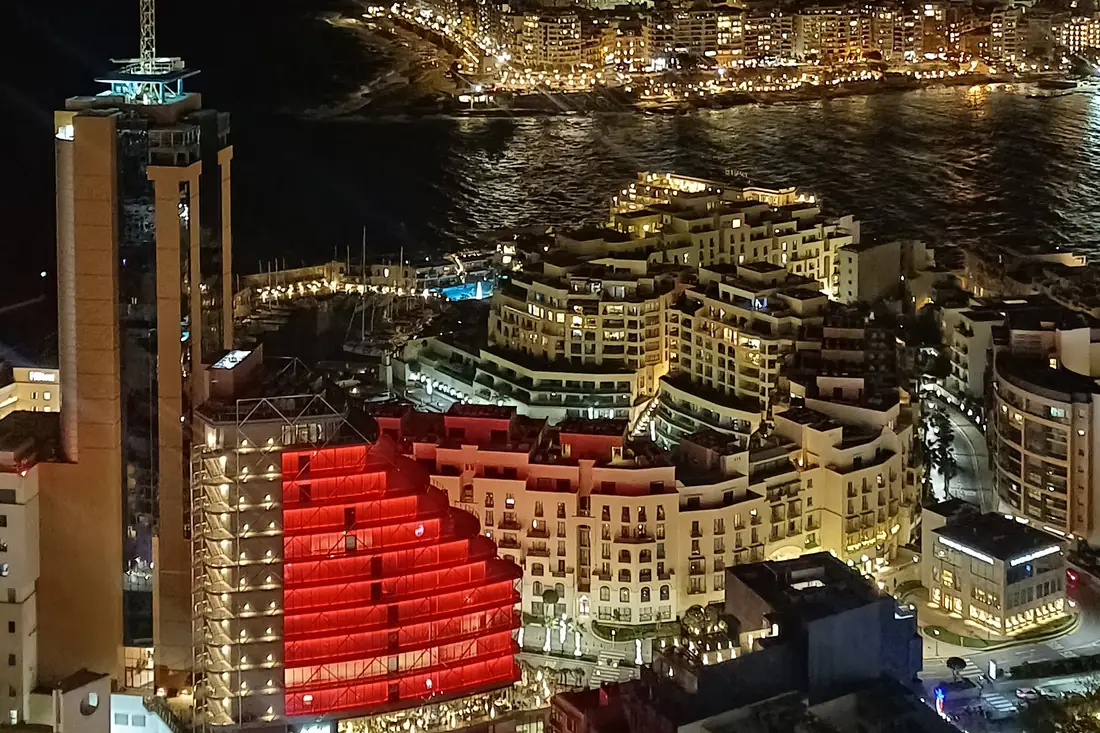
Immediately north of Sliema and effectively continuous with it. Spinola Bay is genuinely pretty at night. The critical detail: Paceville, Malta’s nightlife district, sits inside St Julian’s, and its clubs run until dawn. Five minutes’ walk in the right direction and you would never know; five minutes in the wrong direction and you will not sleep. If you book here, read the reviews specifically for noise, and look at where the property sits on the map rather than trusting the area name.
Valletta — the beautiful one
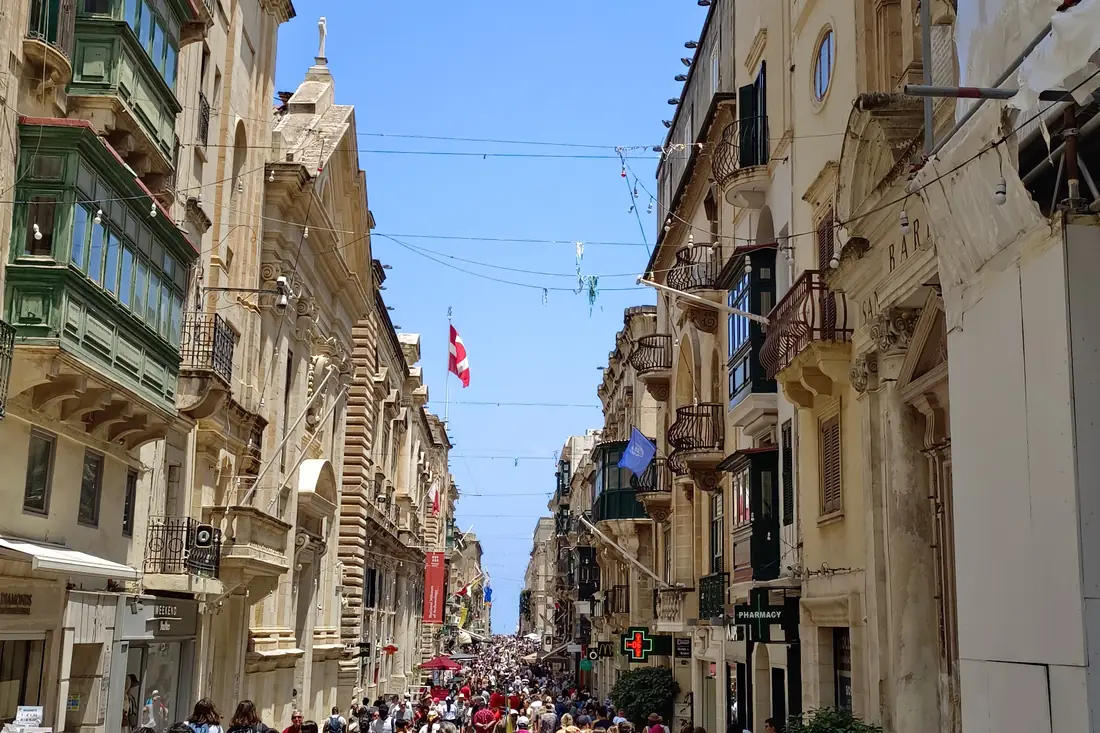
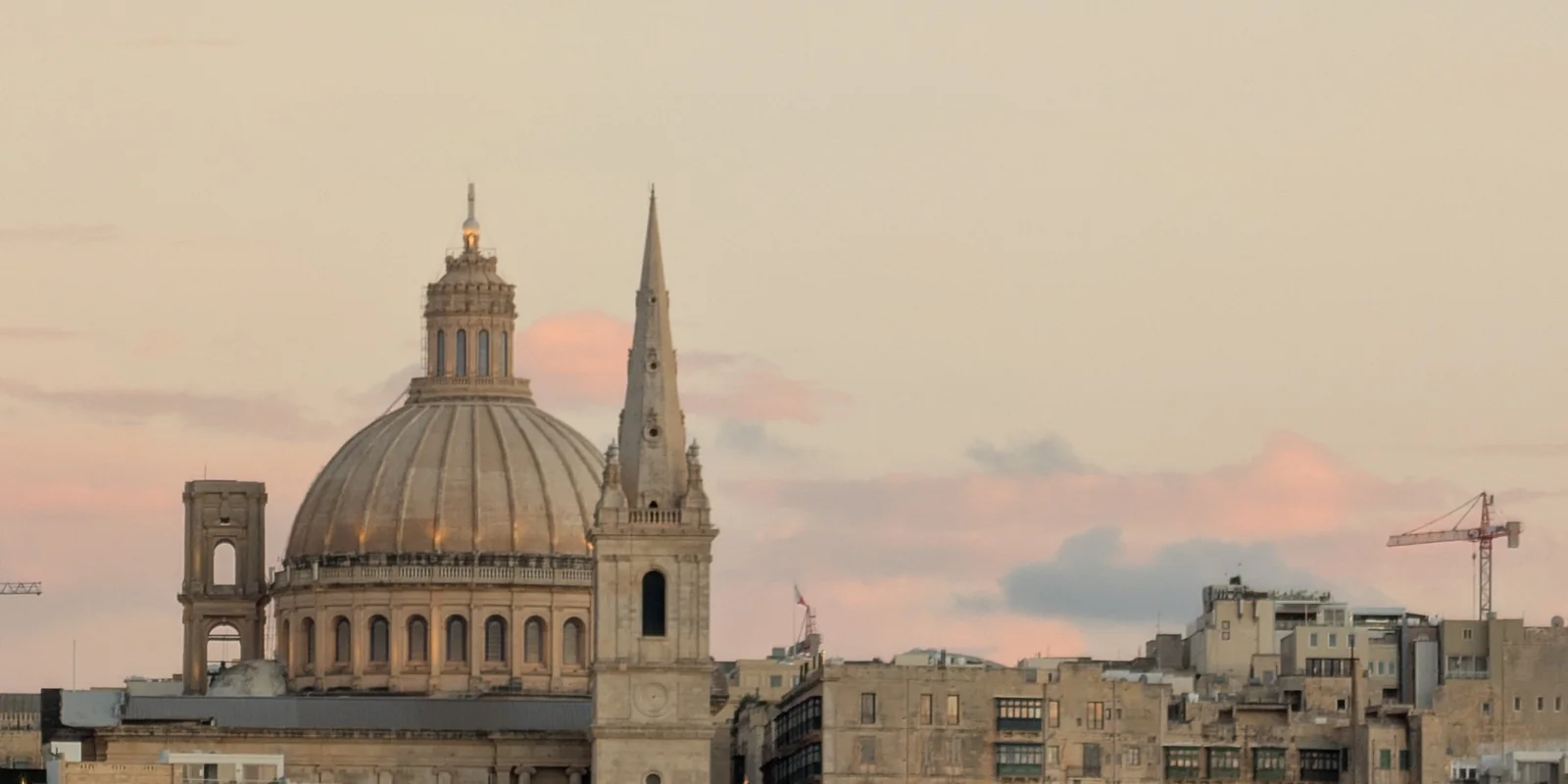
Living inside a fortified sixteenth-century city is a real pleasure, and Valletta has become the best place in Malta to eat. It empties out after the day trippers leave, which is either the point or the problem depending on your temperament. Expect steep streets and staircases, boutique guesthouses rather than resort hotels, and no realistic parking. Ideal for couples, short stays, and anyone whose priority is atmosphere over swimming.
The Three Cities — Valletta’s quieter twin
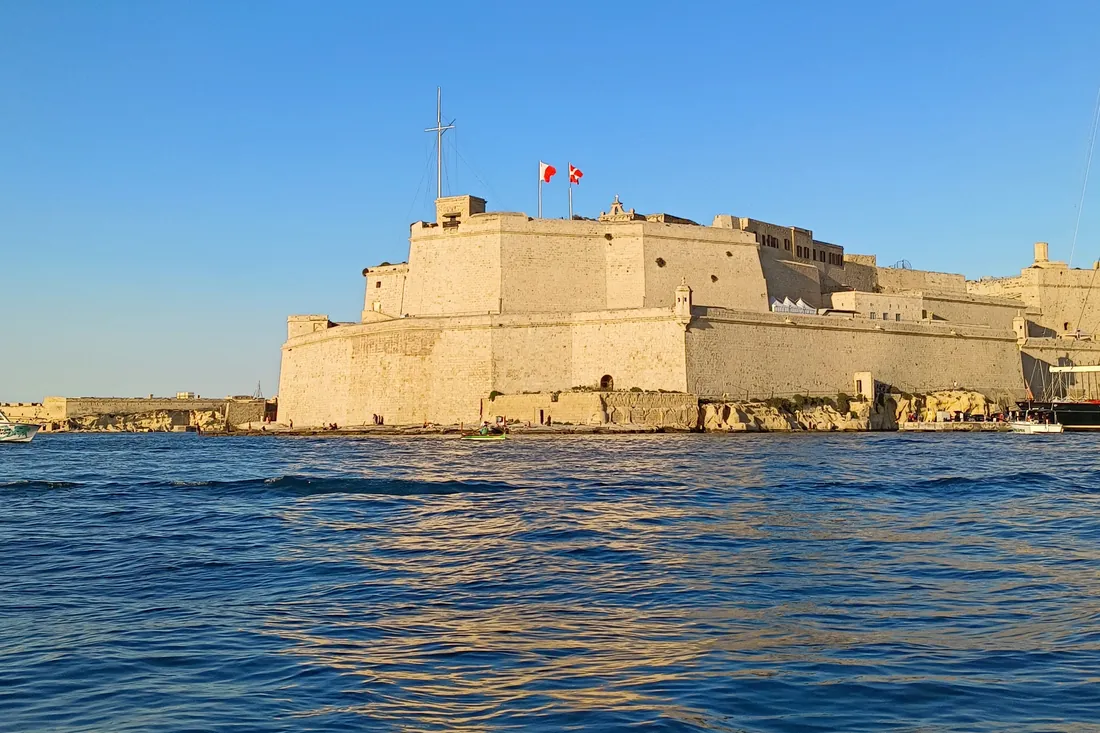
Birgu, Senglea and Cospicua sit across the Grand Harbour and are, to my eye, the most atmospheric corner of the country: the same limestone and the same history, a fraction of the crowd, a marina full of boats and a ferry into Valletta. Fewer restaurants, fewer rooms, and you will use that ferry constantly. For a second trip, or for anyone who found Valletta too busy, this is the answer.
St Paul’s Bay, Buġibba and Qawra — where the value is
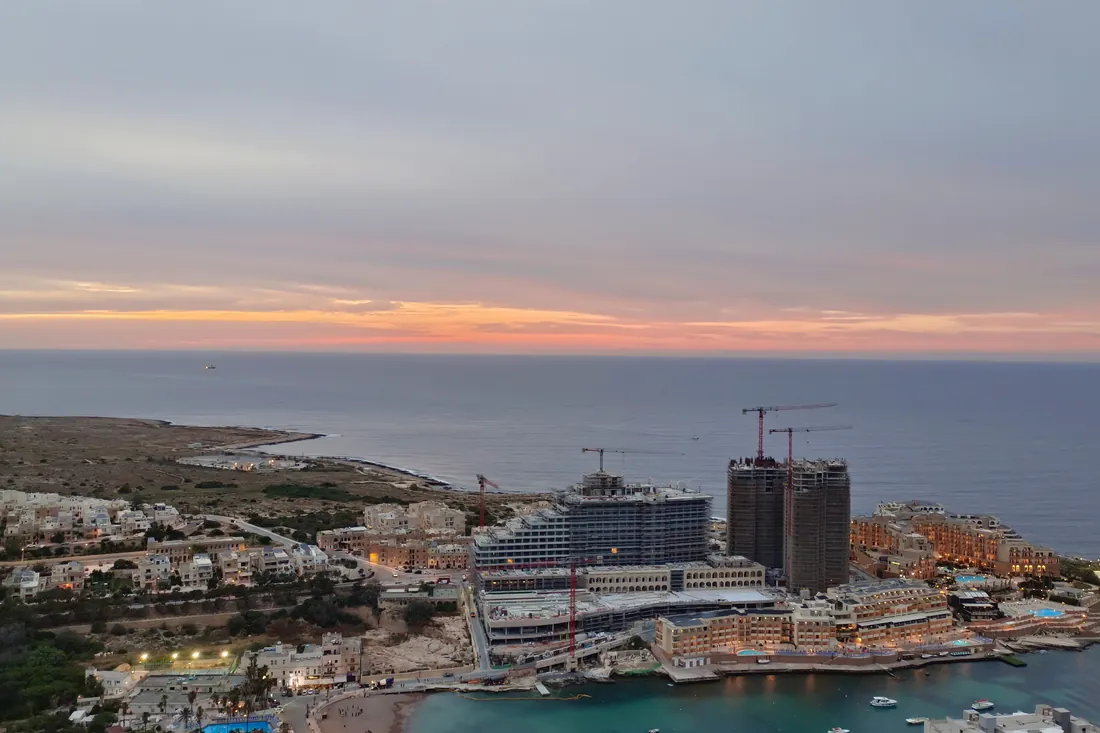
This is where I live, so take the warmth with a pinch of salt. The north-eastern resort strip is noticeably cheaper than the corridor, packed with mid-range hotels and self-catering apartments, close to the Gozo ferry and to Mellieħa’s sand, and lively in a family-holiday way rather than a nightclub way. The trade-off is real: getting to Valletta is a proper journey, and the evening bus service thins out. Excellent with a car, merely acceptable without one.
Mellieħa — for the beach week
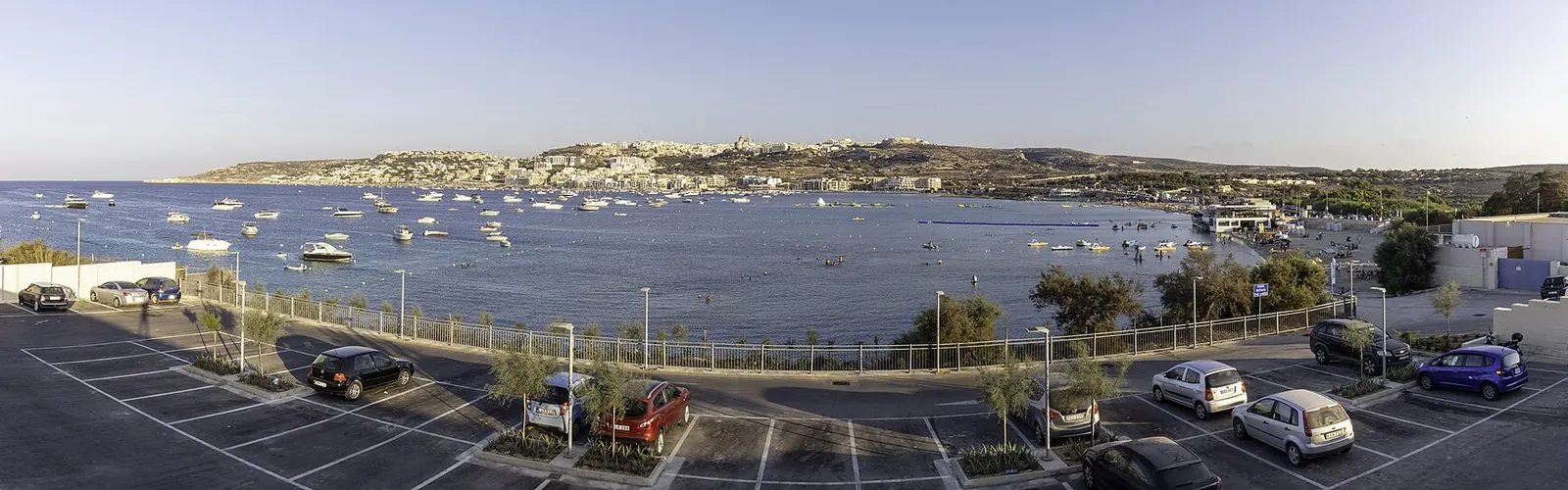
A hillside town above the island’s largest sandy beach, quieter than the resort strip and the closest base to the Gozo ferry and to Comino. The hill is not a metaphor; the town is genuinely above the bay, and you will feel it walking back with beach bags. Best with a car.
Marsaskala and the south — for repeat visitors
The south-east is where Maltese families go for the weekend: Marsaskala’s waterfront, Marsaxlokk’s Sunday fish market and painted luzzus, the Blue Grotto beyond. Very few tourists sleep here, which is exactly the appeal. Thin on hotel stock and dependent on a car.
Gozo — a different holiday
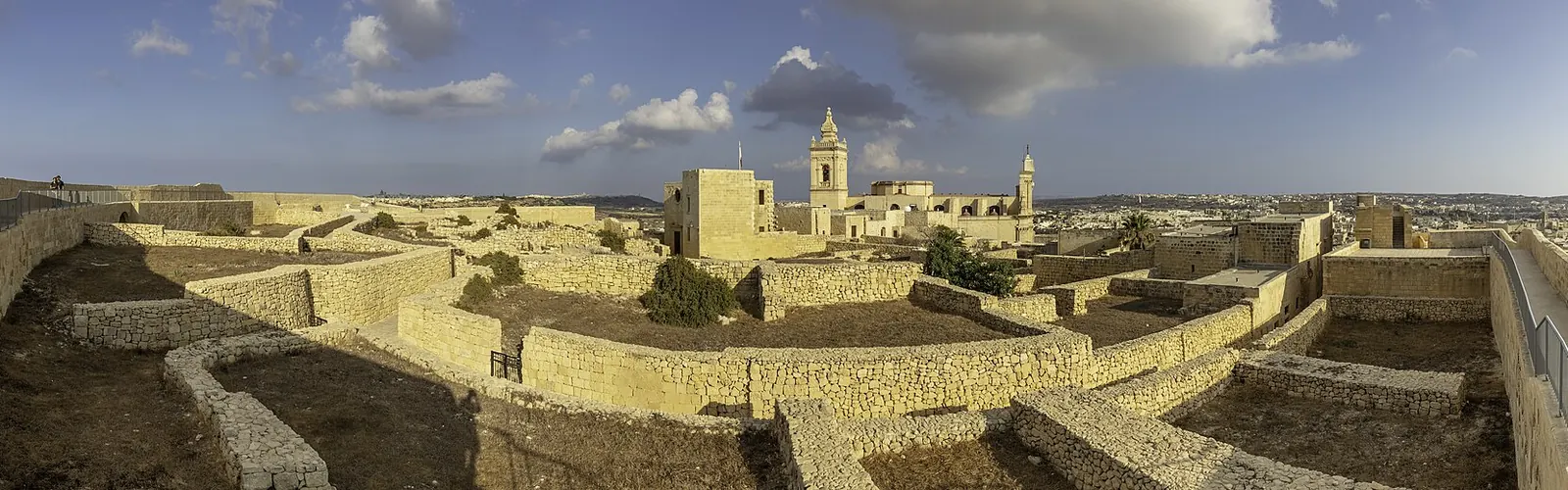
Farmhouses with private pools, the Cittadella above Victoria, red sand at Ramla Bay, and roads you can actually drive. Gozo rewards a minimum of three nights — going for one is a lot of ferry for not much island. Rent a car; the buses exist but the point of Gozo is the empty road.
3. Straight comparison
| Area | Choose it if | Avoid it if | Car needed? |
|---|---|---|---|
| Sliema | First trip; you want ferries, buses and supermarkets at the door | You came for sand or silence | No |
| St Julian’s | You want restaurants and a night out | You are a light sleeper — check the distance to Paceville | No |
| Valletta | Architecture, food, short romantic stays | You have heavy luggage, a car, or want to swim from the door | No — and do not bring one |
| Three Cities | Second visit; atmosphere over convenience | You want choice of restaurants at 10pm | No |
| St Paul’s Bay / Buġibba | Value, families, beach access, Gozo trips | Valletta is your main reason for coming | Strongly recommended |
| Mellieħa | A sand-and-swimming week | You want to walk to dinner options | Yes |
| Gozo | Three nights or more; quiet, rural, a pool | It is a short trip and Malta is the point | Yes |
Search by neighbourhood, not by island
The single most useful trick when booking Malta: search the specific town rather than “Malta”, then switch to map view. On an island this dense, two properties in the same “area” can be a fifteen-minute walk and one steep hill apart, and the map tells you what the address does not. Filter for free cancellation if you are booking early — rates here move a lot as the season firms up.
Check places to stay in Malta Affiliate link — identical price for you, a commission for this site.4. Five things to check on any Malta listing
- Air conditioning, and whether it is included. Some self-catering apartments meter it separately. Between June and September this is not a luxury.
- Which floor, and whether there is a lift. Maltese townhouses are tall and old, and “second floor” can mean sixty steps.
- Construction next door. Malta is being rebuilt more or less continuously and demolition starts early. Recent reviews mention it; the listing never does.
- Parking, if you are renting a car. Take “street parking available” to mean none. Read the car guide before deciding.
- The distance to a bus stop on a route you will use — not just to any bus stop. Cross-check on the operator’s map.